
PM2.5 in Southern Thailand and the burning nobody talks about
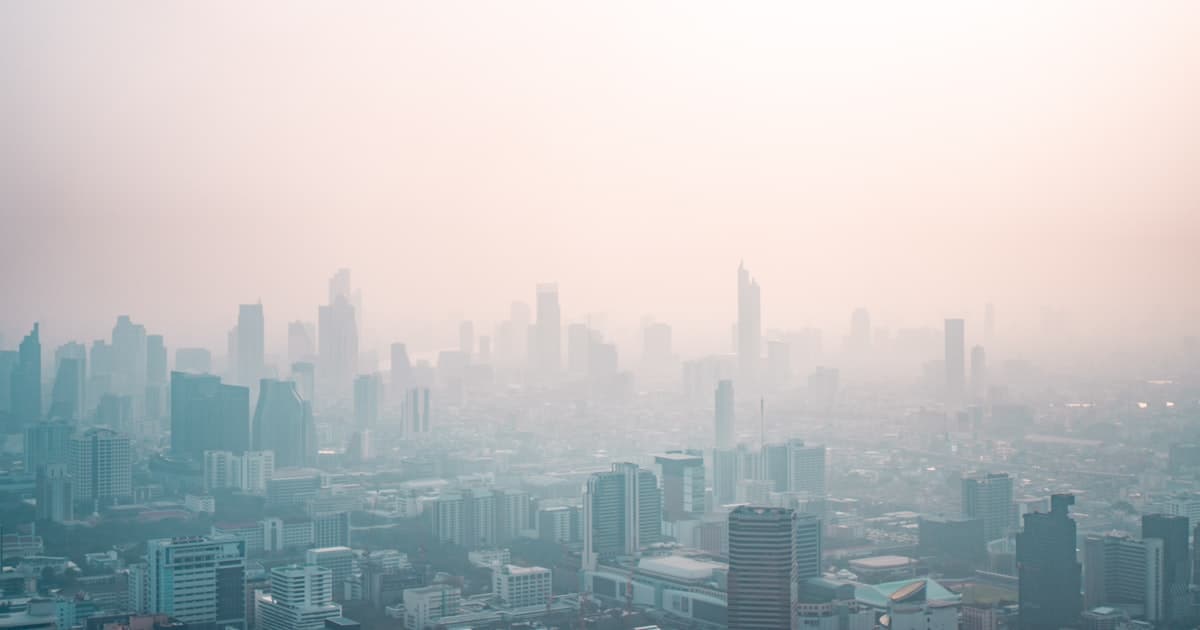
PM2.5 in Thailand is usually associated with the North and crop burning. The South has its own field burning, and it is burning almost nobody discusses.
Photo: Nick van den Berg on Unsplash
The fire that happens every year in rubber plantations
A rubber tree has a cutting cycle of roughly 25–35 years. At the end of that cycle the plantation is felled and replanted. What remains in the field is not only logs but stumps, roots, branches and leaves.
The easiest and cheapest way to deal with it is to pile it and light it.
That burning has no air control, combusts incompletely, and releases considerably more fine particulate than the same wood burned in a purpose-built furnace.
With 13.65 million rai of rubber planted in the South (2024) and replanting running continuously, the aggregate is not small, though there is no data showing what share of the South's particulate it accounts for.
Why growers burn
Not because they do not know. Because it is the option available.
The stumps have to go regardless. A stump left in the ground harbours white root disease, which spreads to newly planted trees. Leaving it is not an option.
Hauling it out costs money. With no buyer, or with volumes too small to justify a truck, burning is what remains.
Time presses. The field has to be cleared for the replanting window.
Telling people to stop burning without offering an alternative does not work. There has to be a buyer and a haulage route that pays.
The alternative that exists
Stumps and roots that must be dug out anyway can be sold as biomass feedstock. The wood there is dense and burns well.
In an industrial furnace with combustion control and dust collection, particulate released per unit of wood burned is far lower than open burning.
And you get something back. A field fire produces smoke. A furnace produces steam or electricity displacing coal.
Limits worth stating plainly
Not every plantation is worth hauling from. If it is far from a plant, or the volume too small for a full load, freight consumes whatever the material is worth.
Grouping with neighbouring blocks felled at the same time helps, because it brings volume up to where a truck makes sense.
And a furnace still emits particulate and NOx. Not zero, but substantially below open burning.
What each party can do
Growers: ask about buyers in the area before deciding to burn.
Plants using this feedstock are pulling material off the fire while displacing fossil fuel.
Everyone else: the problem is not solved by prohibition. It is solved by making material that must be removed worth something.
Our plant is in Trang and takes rubberwood from local plantations. If you are planning a felling and want to know whether it is worth it, call and ask. +66 92 392 2292.
Sources
- US EPA, AP-42 §1.6 Wood Residue Combustion in Boilers
- ERIA, Chapter 2 rubberwood supply
- สำนักงานเศรษฐกิจการเกษตร, ปริมาณการผลิตยางพารา
- US EPA, AP-42 §2.5 Open Burning
- ศูนย์วิจัยและพัฒนาการเกษตรสงขลา กรมวิชาการเกษตร, แนวทางการป้องกันกำจัดโรครากขาว
Reviewed by
Morse · Plant Manager, NTC Biomass
Runs the chipping yard in Ratsada, Trang, and takes customer calls directly. Outside figures in this article are cited in the sources at the end.
Related articles
Rubberwood stumps and roots: from field burning to boiler fuel
Stumps get dug out anyway to stop white root disease. Why the densest wood on the tree ends up on a bonfire, and what has to happen before it can be sold as fuel.
Coal against biomass, measured at the lungs rather than the ledger
What comes out of the stack burning coal, how biomass differs, and the part that is usually overstated: biomass is not pollution free.