
Biomass and Scope 1 reporting: does it actually cut your emissions?
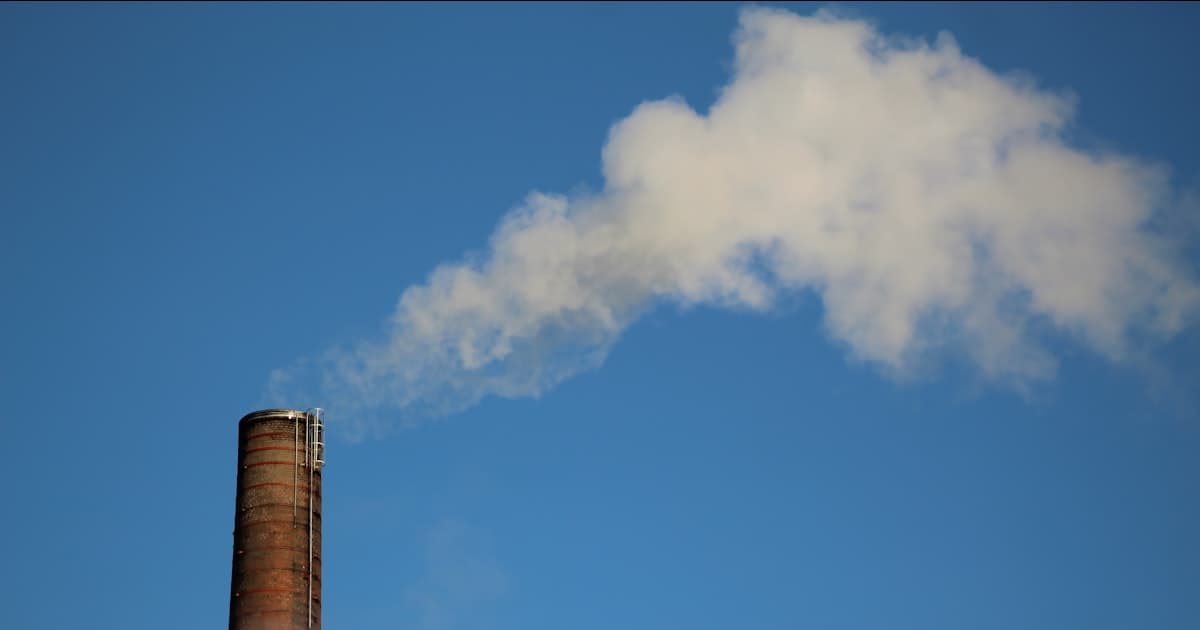
Switching from coal to biomass moves the Scope 1 number significantly. How it is counted is less straightforward than most people assume.
Photo: Anne Nygård on Unsplash
The general accounting principle
Under widely used guidance, CO2 from the biogenic fraction of biomass combustion is reported separately from Scope 1, on the basis that the carbon is reabsorbed over the growth cycle.
The result is a clear reduction in reported Scope 1 from fuel combustion when moving off coal.
It is not zero. Other combustion gases, methane and nitrous oxide, remain in Scope 1 as normal.
A new rule is coming. The GHG Protocol Land Sector and Removals Standard was published on 30 January 2026 and takes effect on 1 January 2027. A company with significant bioenergy use may report biogenic CO2 separately only if it accounts for full lifecycle emissions, including land-use change, and should know where the wood came from. Otherwise that CO2 is counted in Scope 1.
What has to be added, not only removed
Transport. On a supplier's trucks it sits in Scope 3; on your own, Scope 1. The further the haul, the larger it gets.
Energy used to make the fuel. Particularly drying for pellets. That sits in the user's Scope 3.
This is why distance from the feedstock affects the report and not just the freight bill. Fuel produced two hours away carries a better carbon profile than fuel shipped across a continent.
Claims that create risk
Do not claim "carbon free". The accurate statement is short-cycle carbon, not absence of emissions. Overstating it is a greenwashing exposure that assurance providers do catch.
Keep evidence of origin. Assurers ask where the wood came from: residue from another process, or grown specifically to burn. Retain supplier documentation.
Separate reducing from relocating. Cutting emissions at your site while raising them upstream may not improve the total you report.
The effect that usually goes uncounted
In Southern Thailand, roots, branches and leaves left after felling are commonly burned in the open: incomplete combustion, high particulate, no controls.
Diverting that material into a furnace with combustion control reduces emissions at source, not merely at your boiler. It normally falls outside reporting boundaries, but it is a real effect worth describing qualitatively.
Documents to request from a supplier
- Origin of the feedstock
- Calorific value and moisture per batch
- Distance from production site to your plant
- Volume delivered per cycle, with weighbridge tickets
We can provide these because we produce at our own plant in Trang and know which plantations the wood came from. Call +66 92 392 2292.
Sources
- GHG Protocol, Land Sector and Removals Standard v1.1
- GHG Protocol, Corporate Standard
- GHG Protocol, Land Sector and Removals Standard (overview)
- GHG Protocol, Stationary Combustion Guidance
- GHG Protocol, Scope 3 Standard
Reviewed by
Morse · Plant Manager, NTC Biomass
Runs the chipping yard in Ratsada, Trang, and takes customer calls directly. Outside figures in this article are cited in the sources at the end.